
Curtains vs blinds: when to choose fabric over function
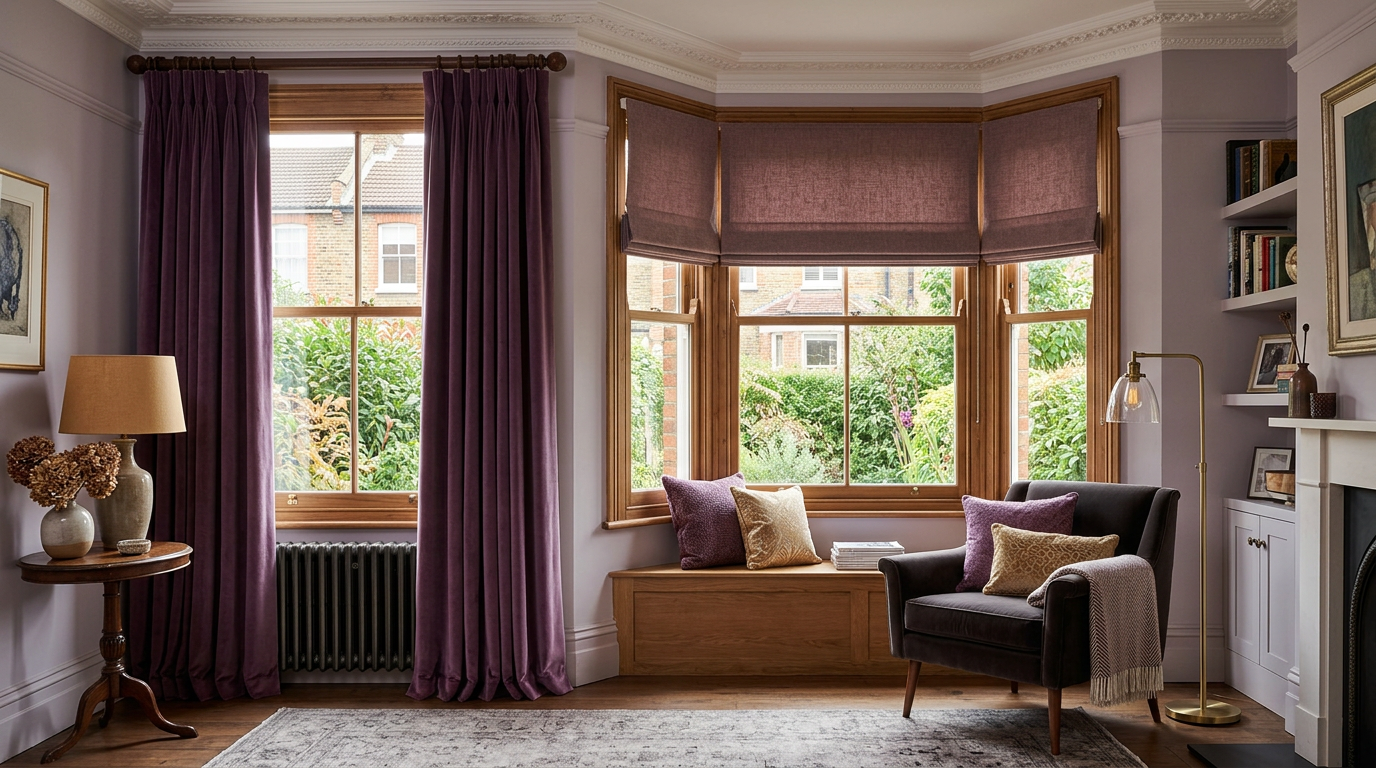
Blinds and curtains are not rivals. They solve different problems, suit different rooms, and can even work together. Understanding when to reach for one over the other helps you dress every window in your home appropriately.
Curtains excel at insulation. A full-length, interlined curtain creates a substantial barrier between the warm room and the cold glass. In older properties with single glazing or draughty sash windows, heavy curtains can reduce heat loss through windows by up to 40 percent. No blind, however well-fitted, matches this level of thermal performance.
Blinds excel at precision light control. A venetian tilts to redirect sunlight exactly where you want it. A blackout roller blocks every photon. A day-and-night blind shifts between sheer and opaque in a single movement. Curtains are binary, open or closed, with limited positions in between.
For living rooms and formal spaces, curtains often create a more finished, layered look. Floor-length fabric pooling gently on the floor, held by tiebacks or swept to one side, introduces texture, colour, and visual warmth that flat blinds cannot replicate. If your room has high ceilings and generous windows, curtains fill the space proportionally.
For kitchens, bathrooms, and compact bedrooms, blinds are the pragmatic default. They take up less space, sit closer to the glass, and avoid fabric trailing near water, cooking surfaces, or furniture. A roller or venetian blind in a kitchen stays clear of the worktop and wipes clean in seconds.
The combination approach works beautifully in bedrooms and living rooms. A sheer roller blind or voile sits against the glass for daytime privacy, while full curtains frame the window and close at night for warmth and complete darkness. This layered look is common in well-designed interiors and gives you the best of both worlds.
Bay windows present an interesting choice. Curtains on a bespoke bay track create a dramatic sweep of fabric that follows the curve. Blinds in a bay require individual treatment for each facet, which can look more architectural and less theatrical. Neither is wrong, but the mood they create is distinctly different.
Budget considerations vary. A pair of quality curtains for a large window, lined, interlined, and hung on a proper pole, can cost as much as blinds for three or four windows. If you are furnishing an entire house, using curtains selectively in key rooms and blinds elsewhere stretches the budget without compromising the overall look.
Room acoustics is an overlooked factor. Soft furnishings absorb sound, and curtains add a considerable amount of fabric to a room. In open-plan living spaces with hard floors and minimal upholstery, curtains can reduce echo and make the room feel warmer acoustically.
We supply and fit both curtains and blinds. Many of our customers end up with a mix, choosing the best option for each window based on its size, orientation, and the room's purpose. The free home consultation covers all options.
Related product
Curtains →Made-to-measure curtains tailored from your choice of fabric, lining, and heading.
Need help choosing the right window treatment?
Request a Free Visit