
Roman blinds: adding softness and style to any room
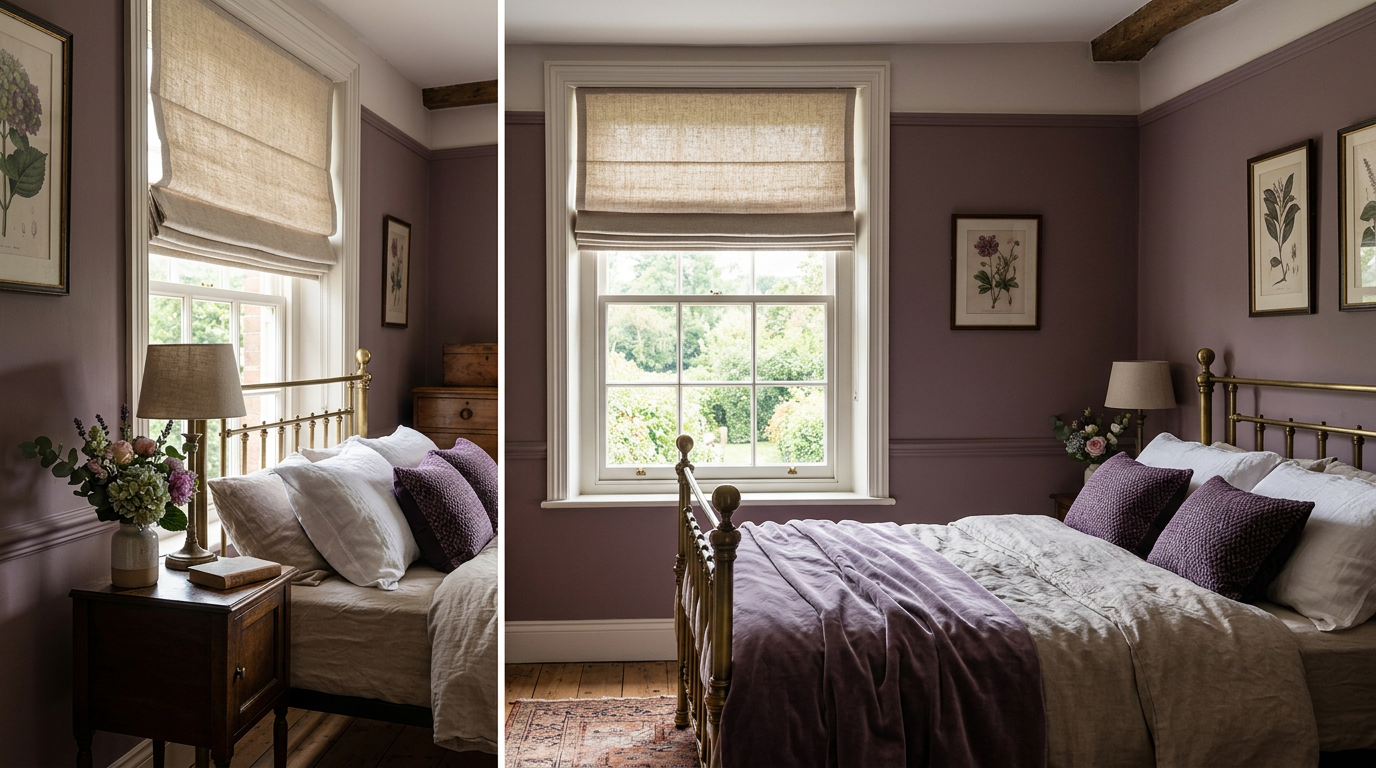
Roman blinds occupy a space between the crispness of a roller and the fullness of a curtain. When lowered, the fabric hangs flat against the window like a panel. When raised, it folds into neat horizontal pleats that stack softly at the top. This combination of clean lines and gentle texture is what makes Romans so versatile.
The fabric is the star of a Roman blind. Because the material hangs flat, every detail of the weave, pattern, and colour is visible. A bold geometric print will make a statement. A neutral linen will add warmth without competing with the rest of the room. A textured chenille or jacquard catches the light differently through the day as the sun angle shifts.
Lining options make Romans adaptable to any room. A standard lining protects the fabric from UV degradation and gives the blind a uniform white appearance from outside. A blackout lining adds a dense layer behind the face fabric, blocking light completely for bedrooms. A thermal interlining adds insulation, making the blind a practical choice for draughty windows in older homes.
In kitchens, Roman blinds work surprisingly well provided you choose an appropriate fabric. Moisture-resistant polyester or a coated cotton will cope with steam and occasional splashes. The key is avoiding long drops that hang near hobs or sinks. A short Roman above a kitchen window, cleared well above the worktop, looks elegant and stays practical.
Bedrooms are where Romans truly shine. The soft folds framing a bed create a sense of luxury that a flat roller cannot match. Pair a blackout-lined Roman with a fabric that complements your bedding, and the window becomes part of the room's interior design rather than an afterthought.
Living rooms and dining rooms benefit from the layered look. A Roman blind inside the window recess, combined with simple curtain panels either side, gives depth and texture to the window without the heaviness of full traditional curtains. This approach works particularly well in bay windows where each facet has its own Roman blind and a single curtain frames the whole bay.
Made to measure is essential for Roman blinds because the fabric must sit perfectly flat within the window recess. Any excess width will cause the blind to bow or bunch. Too narrow and light gaps appear at the sides. A precise measurement ensures the folds form evenly and the blind operates smoothly on its lift mechanism.
Maintenance is straightforward. Most Roman blind fabrics can be lightly vacuumed on a low setting to remove dust. If the fabric is removable from the headrail (many are designed to be), it can be carefully hand-washed or dry-cleaned if a spill occurs. Under normal use, a quality Roman blind lasts ten to fifteen years without issue.
We carry an extensive range of fabrics suited to Roman blinds, from light linens and cottons to heavier weaves and patterned designs. During the free home consultation, we bring the full sample collection so you can hold fabrics against your walls, flooring, and furniture before deciding.
Need help choosing the right window treatment?
Request a Free Visit